
Nov 28, 2025
Slowpitch Softball Bat Guide: Stamps, Weight, End-Load & More
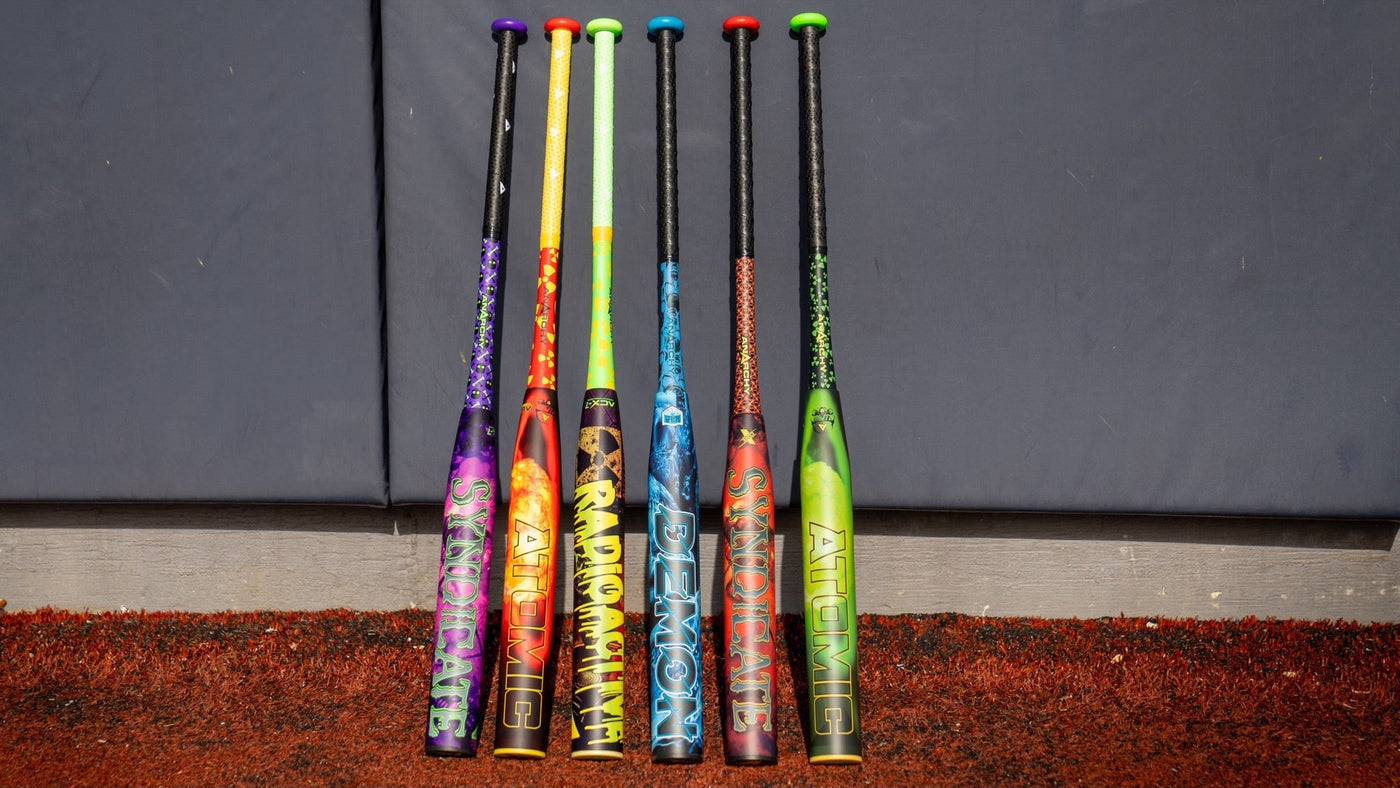
What to Look for When Choosing a Slowpitch Softball Bat
Choosing the right slowpitch bat isn’t just about graphics or hype — it’s about matching the bat to your league, your swing, and what actually feels right in your hands. Whether you’re picking up your first bat or upgrading your gamer, this guide breaks down what really matters before you step into the box.
1️⃣ League Association: USSSA, USA/ASA, and SSUSA
The very first thing to get right is league certification. If your bat doesn’t have the correct stamp for your league, it doesn’t matter how hot it is — it’s not legal.
USSSA – 240 Stamp (Current Standard)
- Must have the USSSA 240 NTS stamp.
- Older 220-stamp bats are now illegal in sanctioned USSSA play.
- 240 bats start firmer and last longer.
- Many tournaments also run compression testing.
- USSSA bats normally carry the ISA & NSA stamps as well.
USA / ASA Softball
- Uses softer balls (commonly 52/300).
- Bats flex more and are tuned differently than USSSA.
- Approved models carry the USA/ASA stamp.
SSUSA / Senior Softball
- Designed for 40+ divisions.
- The hottest legal bats — higher performance ceiling.
- Not legal for USSSA or USA play.
Dual-Stamp Bats (USSSA + USA/ASA)
- Pros: Great for rec players who switch leagues.
- Cons: Don’t hit as hot as single-association bats.
- Power hitters often avoid them for max performance.
- Contact hitters enjoy the versatility.

2️⃣ 1-Piece vs. 2-Piece Construction
1-Piece Bats
- Stiffer, more connected feel.
- More feedback and more “direct” power transfer.
- More sting on mishits.
2-Piece Bats
- More whip and flex.
- Smoother feel on contact.
- Less vibration.


3️⃣ Overall Bat Weight (including .5 oz options + 24 oz)
- Common weights: 25–27 oz.
- .5 oz increments (25.5, 26.5) help fine-tune swing feel.
Who benefits from what?
- 25–25.5 oz: Bat-speed hitters & line-drive players.
- 26–26.5 oz: Most popular all-around range.
- 27–27.5 oz: Stronger players wanting more carry.
What about 24 oz?
While rare, 24 oz models are useful for:
- Smaller players.
- Players transitioning from fastpitch who are used to 34/24 (-10) bats.

4️⃣ Weight Distribution & Barrel Length
Balanced
- Easier barrel control.
- Smoother swing plane.
End-Loaded
- More mass at the end cap.
- More distance for hitters with good bat speed.
- Common loads: .5, .75, 1 oz.
Barrel Length Breakdown
- 12”: Quick through the zone, usually 2-piece.
- 12.5”–13”: Common in 1-piece end-loaded bats.
- 13.5”–14”: Larger sweet spot, more forgiving.


5️⃣ Barrel & Compression Technology
Composite barrels open up over 100–200 swings. Alloy barrels are hot immediately but don’t increase performance over time. Compression testing matters because:
- Lower compression = hotter bat.
- Too low = fails USSSA compression testing.
- Rotate the bat during BP to keep compression even.
6️⃣ Handle Feel & Knob Design
Handle thickness and knob design have a huge effect on comfort and consistency.


🐺 Final Thoughts
The best slowpitch bat fits your swing, your league, and your comfort level. Start with association, then fine-tune weight, load, construction, and barrel length. From there, it’s all about finding a bat that feels like an extension of your hands.
🔗 Want to shop slowpitch bats?
Affiliate disclosure: I may earn a small commission from purchases made through these links, at no cost to you.